
The old ways
As it used to be
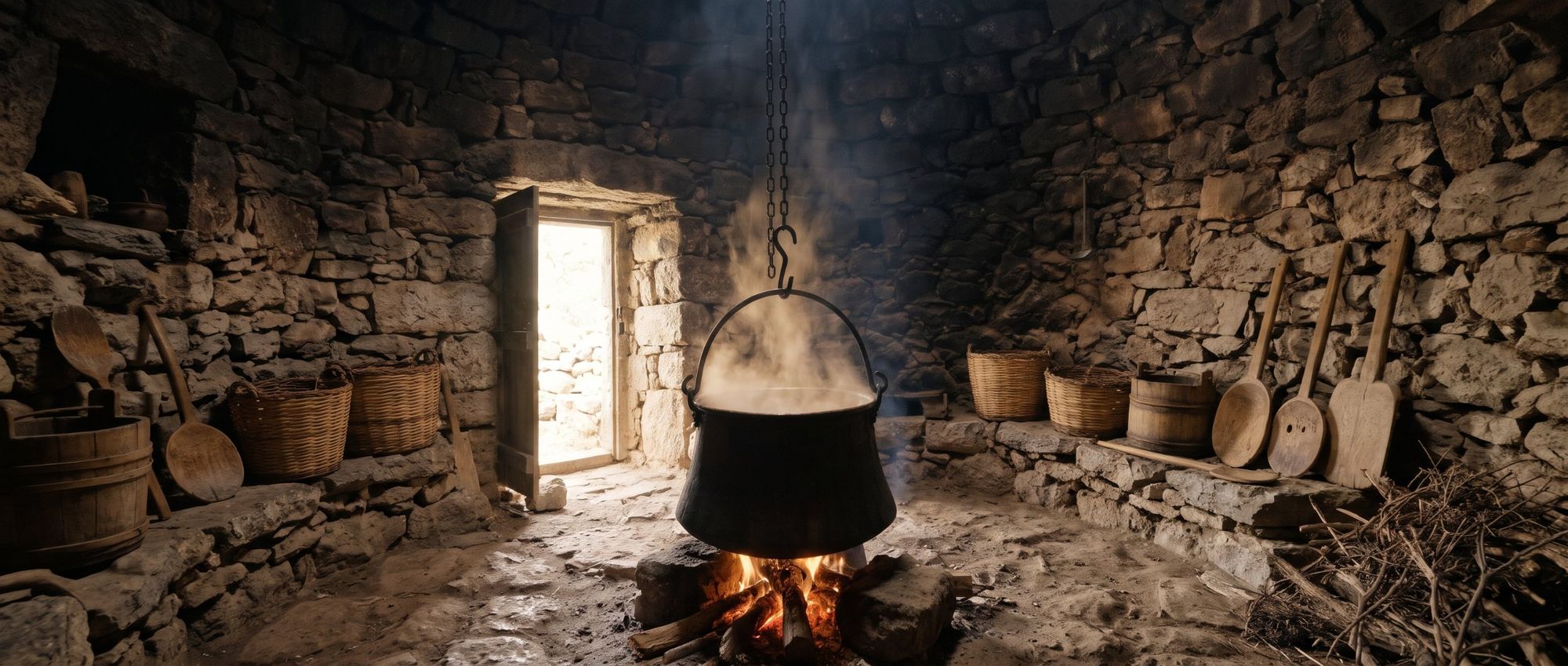
For thousands of years cheese on Crete was made with what the mountain gave: milk drawn that morning, rennet from the stomach of a young lamb, baskets woven from twigs, copper, wood and stone. Much of this knowledge was never written down. Here is what the shepherds did, why it worked, and what researchers have found when they looked at the old ways with today's tools.
Rennet from a lamb's stomach
What they did
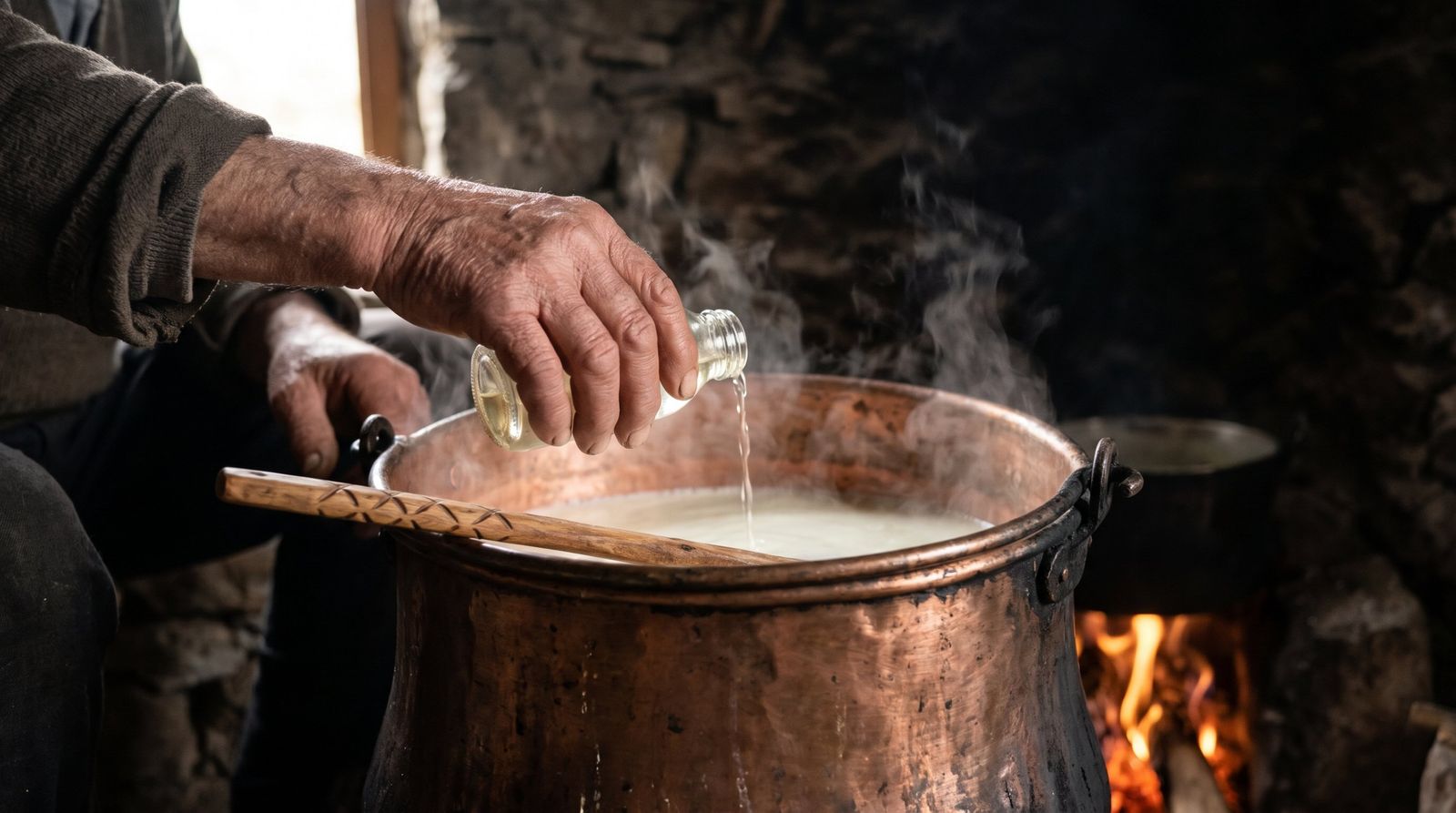
In the mitata the milk was set with rennet the shepherd made himself: a watery mixture from the stomach of a lamb about ten days old, still feeding on its mother's milk. It was stirred into the warm milk, and the covered cauldron was left to rest for half an hour to an hour. Kid stomach was used in the same way. Most dairies today use commercial rennet.
What research says
Greek researchers made feta with traditional liquid rennet from lamb and kid stomachs and compared it with feta made with commercial rennet. The composition and the breakdown of proteins were the same, but the ripe cheese made with traditional rennet scored clearly higher for flavour. They traced the difference to an enzyme in the traditional rennet that breaks down fat (a lipase), which raised the fatty acids that give a sharper, more piquant taste. The extra microbes the rennet brought in were found in three-day-old cheese and were gone by sixty days. A later study of artisanal rennets from different regions found their overall quality acceptable.
(Blitzer, 1990; Moschopoulou et al., 2004; Moschopoulou et al., 2007)
The “mother”: yesterday's whey
What they did
Before laboratory cultures existed, the microbes that turn milk into cheese came from the place itself: the vessels, the tools, the air of the dairy, and a little of yesterday's batch. Cheesemakers in many parts of Greece added some whey or cheese from the day before to the new milk, so that the good microbes of the house carried on from one batch to the next. In the Cyclades, Kopanisti is traditionally started with a spoonful of an old, over-ripe Kopanisti, called the “mother”. In Epirus and Thessaly, Galotyri was once soured by the “flora of the house” or by a little of the previous batch.
What research says
When researchers examined a two-year-old Kopanisti “mother” from Mykonos, they found only two species of lactic acid bacteria in it. This is one reason why the “same” traditional cheese tastes different from one dairy to the next: each house keeps its own microbes.
(Kazou et al., 2023; Samelis and Kakouri, 2019; Litopoulou-Tzanetaki and Tzanetakis, 2014)
Wood, reed and clay
What they did
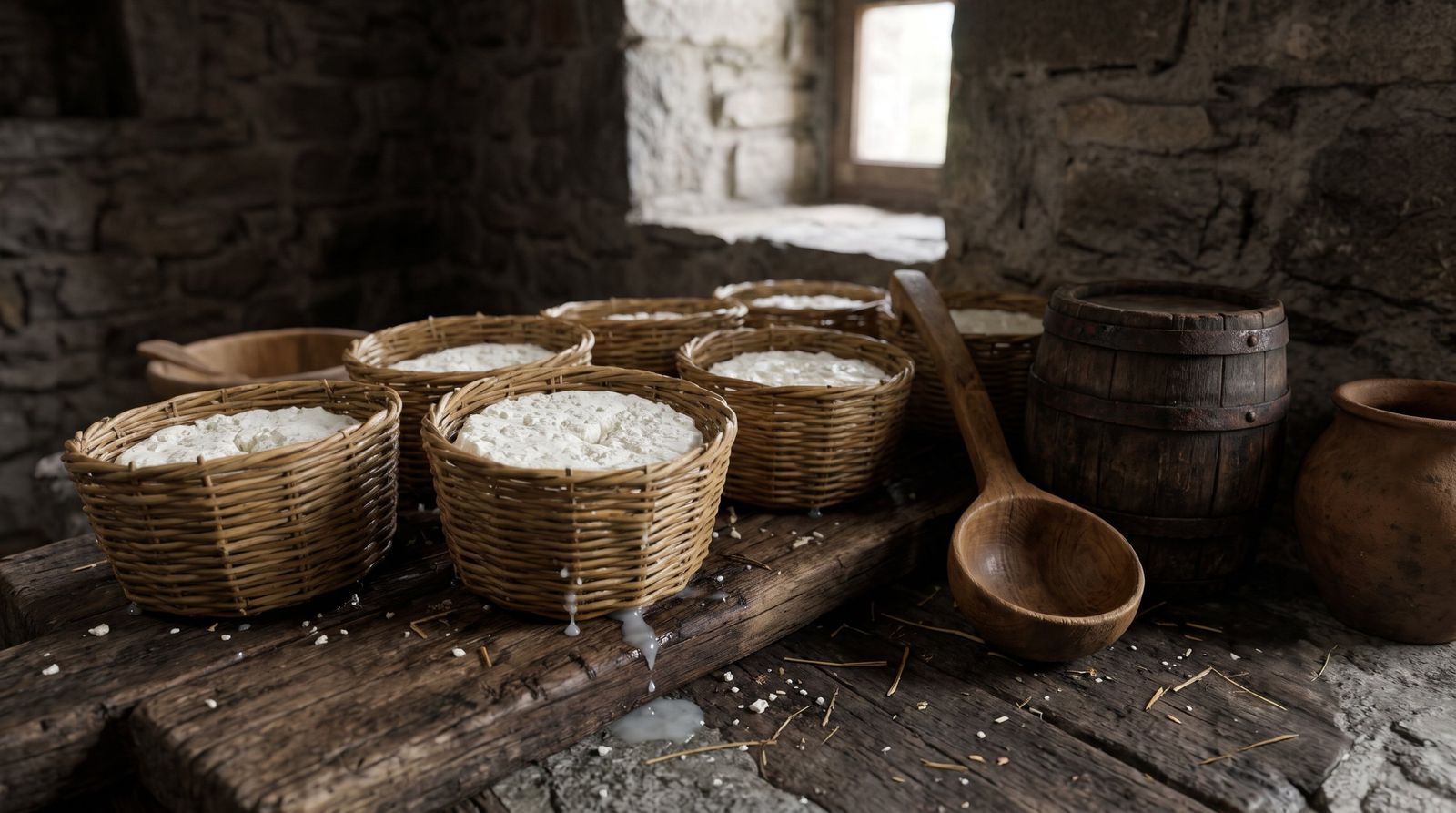
The tools of the mitato were made from what grew nearby. The curd was worked with a whisk-like stirrer of pear wood. Cheese wheels took their shape in the toupi, a basket woven from wild olive or styrax twigs, which left its pattern on the rind. Myzithra was packed in a goatskin sack, and whey cheeses were matured in barrels: Xinomyzithra Kritis is still matured in barrels for at least two months.
What research says
Wood is often seen as hard to keep clean, but studies tell a more balanced story. Feta PDO ripened in an old beech barrel showed no significant pathogens and met the legal requirements; the wood enriched the cheese's microbial community and helped it to acidify. The same study notes that Greek food safety guidance for small traditional dairies allows the wooden barrel. Other researchers have compared barrels, tins and stainless steel and found that the container shapes the microbes of the cheese.
(Blitzer, 1990; Museum of Cretan Ethnology, n.d.; Feta in beech barrel, 2025; Spyrelli et al., 2020)
Milk as it comes from the animal
What they did
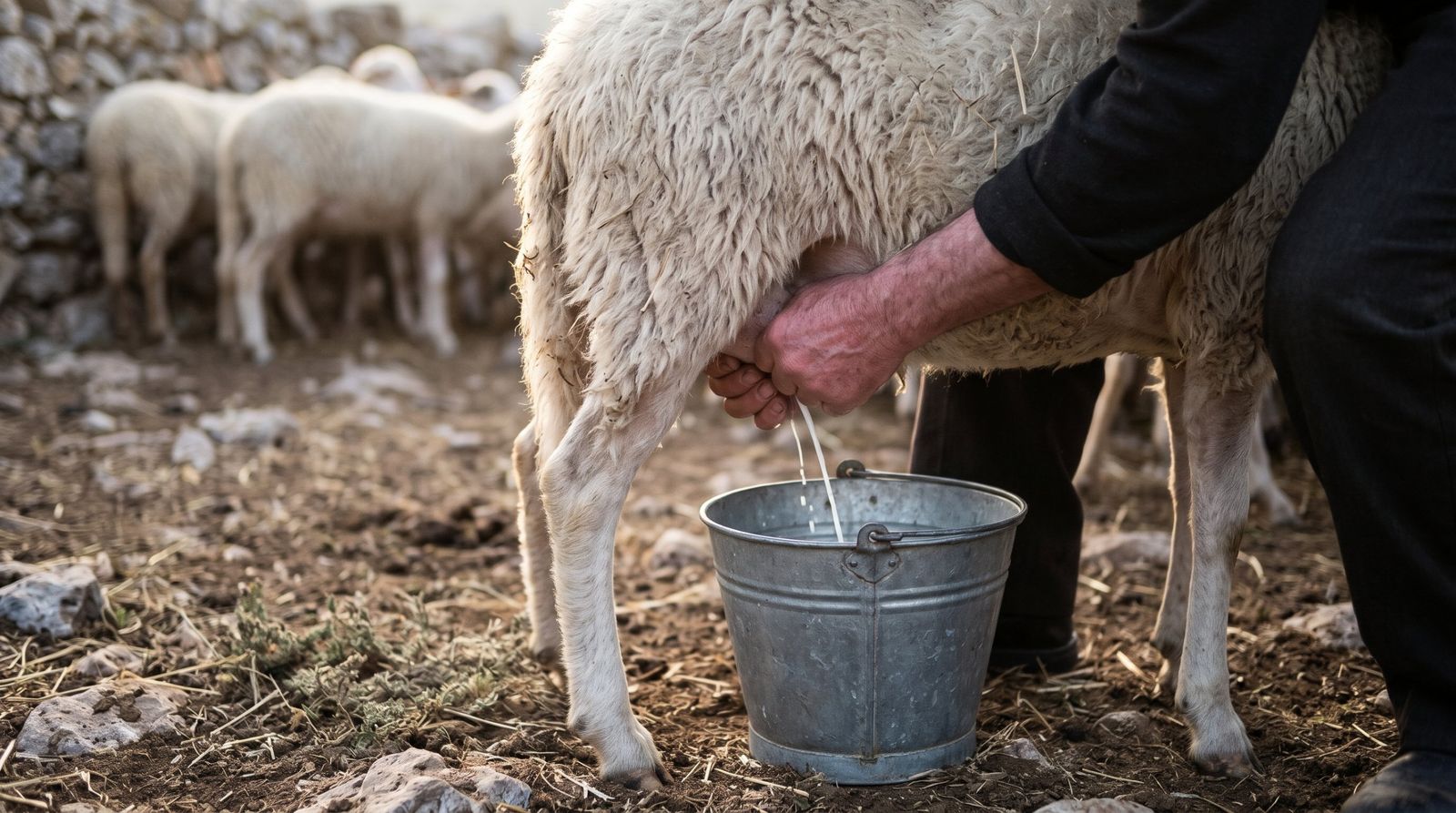
In the mitata, milk was turned into cheese on the day it was drawn, still warm or barely cooled, without heating it first. It carried with it the microbes of the animals, the pasture and the place.
What research says
In a study of Anevato, a soft cheese from northern Greece, cheeses made from heat-treated milk lacked the typical taste of those made from raw milk, even when the makers added cultures taken from traditional Anevato. In Crete, researchers made Graviera Kritis with raw and with pasteurised milk in a small dairy using traditional methods, to study how harmful bacteria behave in each. Raw milk gives flavour, but it needs healthy animals, clean milking and careful control; EU law allows raw milk cheese under strict hygiene rules. Pregnant women and people with weak immunity are usually advised to choose cheese from pasteurised milk.
(Xanthopoulos et al., 2000; Samouris et al., 2011; Regulation (EC) No 853/2004)
Sour milk: the simplest cheeses
What they did
Some of the simplest cheeses are set mainly by letting the milk sour slowly, with little rennet or none. Crete has two of them with protected status: Pichtogalo Chanion, whose name means “set milk”, and Xygalo Siteias, whose name goes back to the ancient Greek oxygala, “sour milk”. Elsewhere in Greece, Galotyri was made from boiled milk left to cool for a day in clay pots, salted and let to sour, and Tsalafouti was set over the fire without rennet and soured for a few days in caves with running water.
What research says
These cheeses are still studied today. In 62 samples of traditional Pichtogalo Chanion, researchers found a very moist, mildly salted and clearly acidic cheese, and showed that a fine Pichtogalo can also be made from pasteurised milk with a mesophilic starter culture at 23 °C. A review of Xygalo Siteias from Sitia estimates its production at 60 to 100 tonnes a year, from 150 to 200 tonnes of milk.
(Papageorgiou et al., 1998; Lapidakis and Fragkiadakis, 2022; Samelis and Kakouri, 2019)
Fig sap: Homer's rennet
What they did
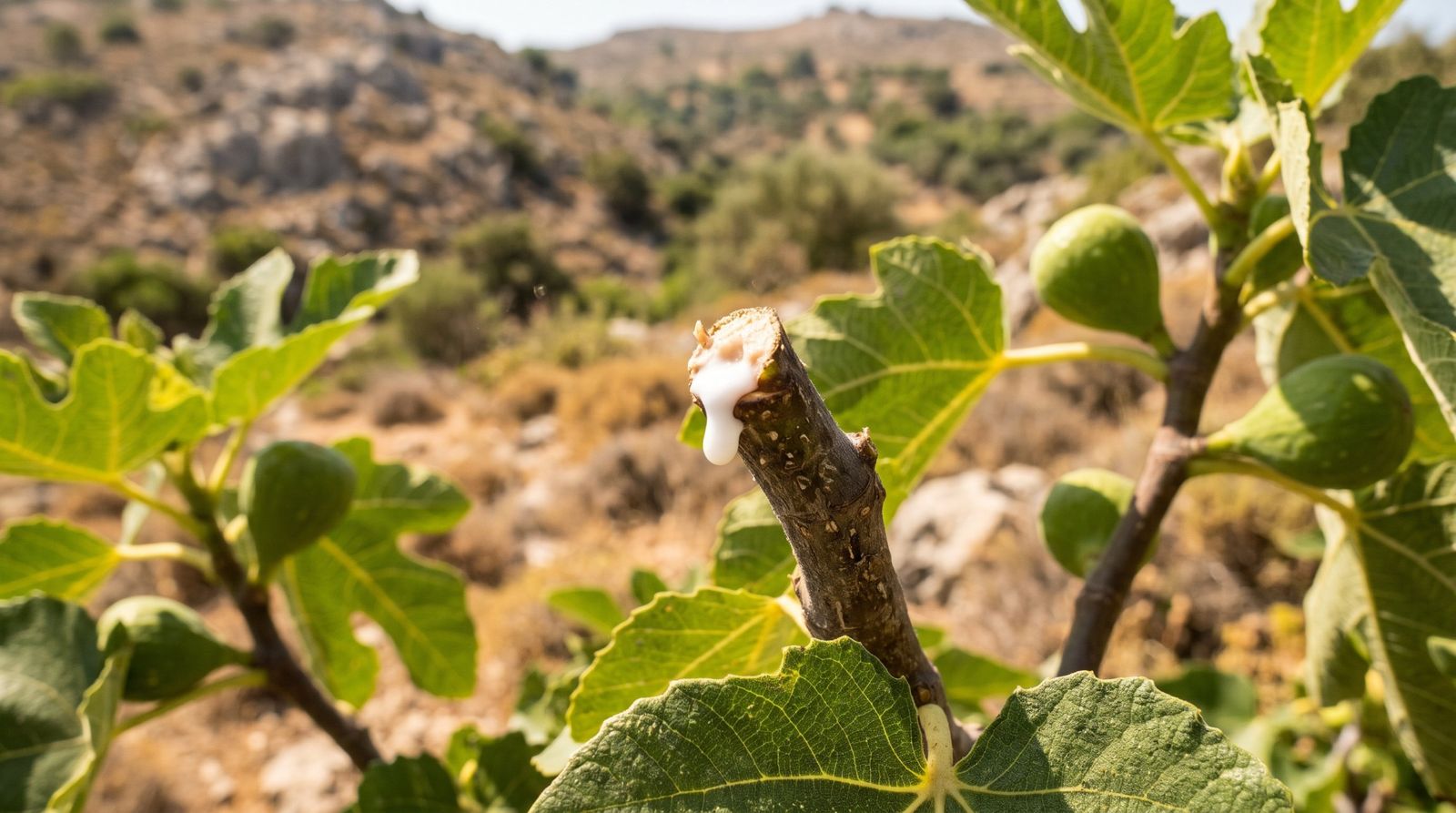
The milky sap of the fig tree contains an enzyme, ficin, that sets milk. The ancient Greeks knew it: in the Iliad, Homer compares the speed of a healing to fig juice stirred into white milk, which thickens at once, and Aristotle writes that both fig juice and rennet curdle milk.
What research says
Descriptions of tyrozouli, the Cretan home cheese, list fig sap among the things used to curdle the boiled milk, together with vinegar and lemon. We found no scientific study of a Greek cheese made with fig sap; the practice also survives in parts of southern Italy and Turkey. How often it is still used in Cretan homes has not been recorded.
(Homer, Iliad 5.902–904; Aristotle, History of Animals III; Journal of Ethnic Foods, 2019; see the tyrozouli page)
Keeping cheese before the fridge
What they did
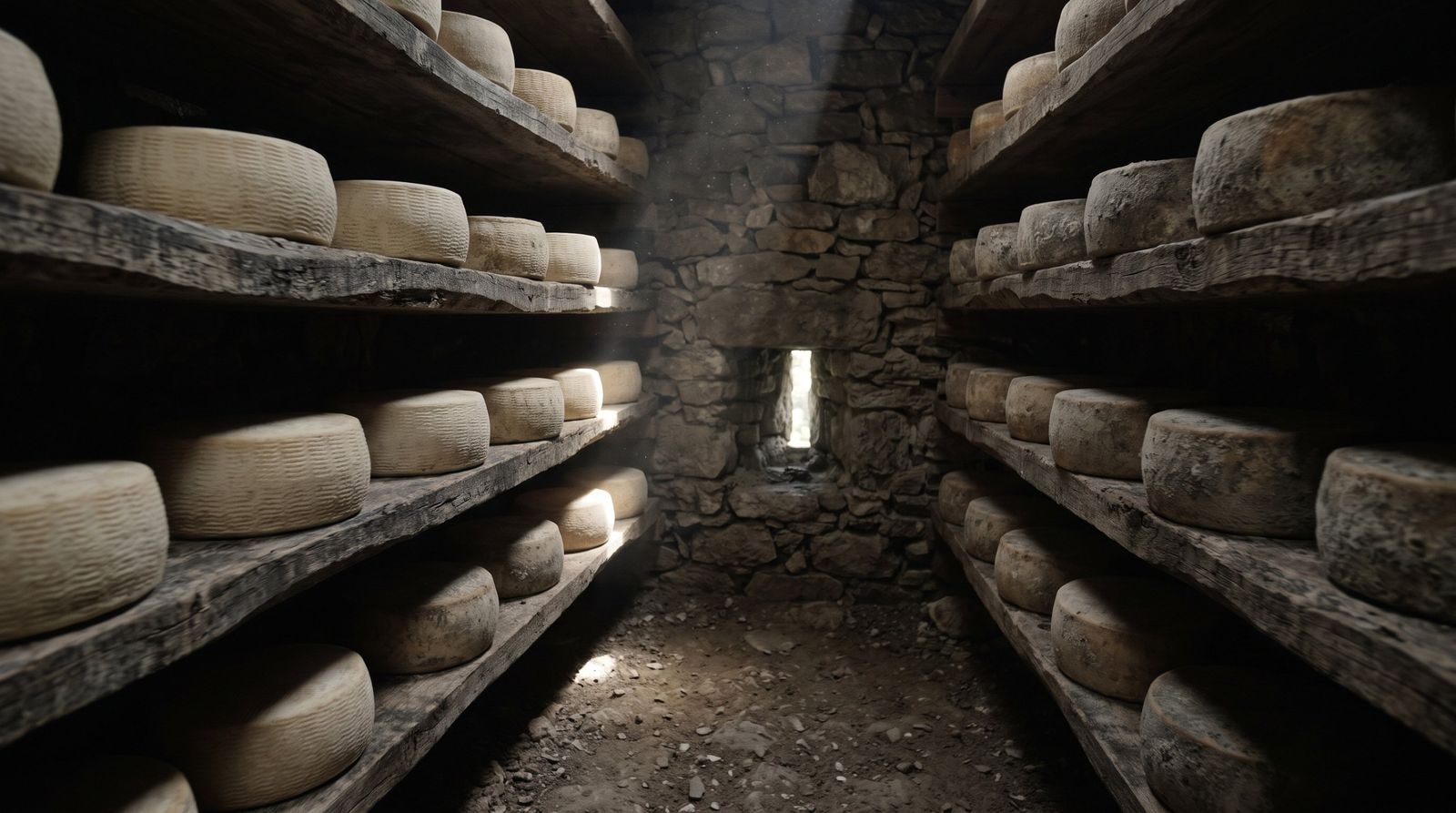
The cheeses ripened in the tyrokeli: in the White Mountains a part walled off inside the stone koumos, in the Dikti mountains a cool storeroom dug into the hillside, where the wheels ripened in the cool and dark. Coarse salt, pounded in a stone mortar, protected the cheese; myzithra was packed in goatskin and kept for about a month, or salted and dried into anthotyros that kept for months.
What research says
Other parts of Greece found their own ways: Ladotyri of Lesvos was kept in olive oil, Manoura of Sifnos was softened in barrels of red wine and covered with its lees, Kariki of Tinos ripened inside a dried gourd, and Melichloro of Lemnos was hung in the sun in a wooden cage. Each method controls moisture, air and microbes, the same things a modern ripening room controls with machines.
(Blitzer, 1990; Plymakis, 2014; Museum of Cretan Ethnology, n.d.; Pappa and Kondyli, 2023)
The words for the tools are explained in Words and tools, the story of the mitata on the history page, and the people who make Cretan cheese today on the producers page.
References
- Aristotle. History of Animals, Book III.
- Blitzer, H. (1990). Pastoral life in the mountains of Crete: An ethnoarchaeological perspective. Expedition, 32(3), 34–41. https://www.penn.museum/sites/expedition/pastoral-life-in-the-mountains-of-crete/
- Feta in beech barrel, 2025: study of Feta PDO ripened in a beech wood barrel. International Journal of Functional Nutrition, 6, 10. https://www.spandidos-publications.com/10.3892/ijfn.2025.51
- Homer. Iliad, 5.902–904.
- Journal of Ethnic Foods (2019). Article on cheese and dairy in ancient Greek sources, including fig sap as a coagulant. https://journalofethnicfoods.biomedcentral.com/articles/10.1186/s42779-019-0007-5
- Kazou, M. et al. (2023). Microbiota of Kopanisti and its “mother”. Microorganisms, 11, 66.
- Lapidakis, N. and Fragkiadakis, G.A. (2022). Dairy processing: The soft spreadable cheese Xygalo Siteias. Processes, 10(1), 80. doi:10.3390/pr10010080
- Litopoulou-Tzanetaki, E. and Tzanetakis, N. (2014). The microfloras of traditional Greek cheeses. Microbiology Spectrum, 2(1). doi:10.1128/microbiolspec.cm-0009-2012
- Moschopoulou, E., Kandarakis, I. and Anifantakis, E. (2004). Feta cheese made with traditional liquid rennet from lamb and kid. Food Chemistry.
- Moschopoulou, E. et al. (2007). Quality of artisanal rennets used for Feta cheese. Small Ruminant Research, 72.
- Museum of Cretan Ethnology. (n.d.). Κτηνοτροφία [Livestock farming; In Greek]. https://www.cretanethnologymuseum.gr/el/κτηνοτροφία/
- Papageorgiou, D.K., Abrahim, A., Bori, M. and Doundounakis, S. (1998). Chemical and bacteriological characteristics of Pichtogalo Chanion cheese and mesophilic starter cultures for its production. Journal of Food Protection, 61, 688–692.
- Pappa, E.C. and Kondyli, E. (2023). Descriptive characteristics and cheesemaking technology of Greek cheeses not listed in the EU geographical indications registers. Dairy, 4(1), 43–67. doi:10.3390/dairy4010003
- Plymakis, A. (2014, December 13). Κούμοι – Μιτάτα [Koumoi and mitata; In Greek]. Chaniotika Nea. https://www.haniotika-nea.gr/koumi-mitata/
- Regulation (EC) No 853/2004 laying down specific hygiene rules for food of animal origin.
- Samelis, J. and Kakouri, A. (2019). Microbiological quality and safety of Galotyri PDO. AIMS Agriculture and Food, 4(3), 685.
- Samouris, G. et al. (2011). Survival of pathogens in Graviera Kritis cheese made with raw and pasteurized milk. Journal of the Hellenic Veterinary Medical Society, 62(3), 205–211. doi:10.12681/jhvms.14850
- Spyrelli, E. et al. (2020). Effect of the container material on the microbiota of Feta cheese. Fermentation, 6(1), 12.
- Xanthopoulos, V. et al. (2000). Anevato cheese made from raw and heat-treated milk. Cited in Litopoulou-Tzanetaki and Tzanetakis (2014).