
Seasonal calendar
The cheese year
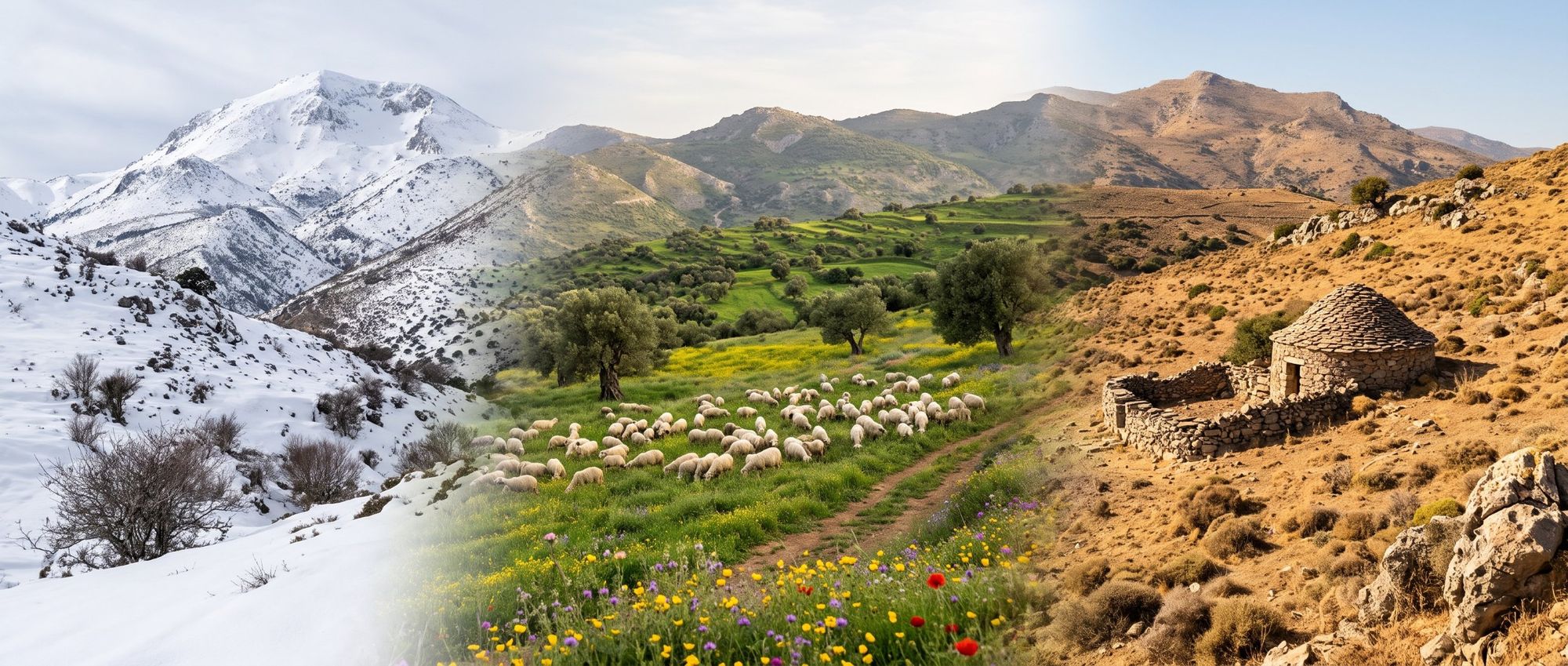
Cretan cheese follows the year of the flock. Lambs are born in autumn, the milk flows from winter to early summer, the flocks once climbed to the mountains in the heat, and the cellars fill as the milk runs dry. Knowing this rhythm tells you when to look for each cheese, and why it tastes the way it does.
Month by month
Main periodSome flocks, or less milk
| Jan | Feb | Mar | Apr | May | Jun | Jul | Aug | Sep | Oct | Nov | Dec | |
|---|---|---|---|---|---|---|---|---|---|---|---|---|
| The flock | ||||||||||||
| Lambing | Jan: Some flocks, or less milk | Feb: Some flocks, or less milk | Mar: - | Apr: - | May: - | Jun: - | Jul: - | Aug: - | Sep: - | Oct: Main period | Nov: Main period | Dec: - |
| Mature ewes in October and November; young ewes in January and February. | ||||||||||||
| Milking | Jan: Main period | Feb: Main period | Mar: Main period | Apr: Main period | May: Main period | Jun: Some flocks, or less milk | Jul: Some flocks, or less milk | Aug: Some flocks, or less milk | Sep: - | Oct: - | Nov: - | Dec: Some flocks, or less milk |
| From weaning, around the end of December; most milk from January to May; once a day from mid-June; ends in late July, or in August for late-lambing ewes. | ||||||||||||
| Mating | Jan: - | Feb: - | Mar: - | Apr: - | May: Main period | Jun: Main period | Jul: - | Aug: - | Sep: - | Oct: - | Nov: - | Dec: - |
| Natural mating in May and June, so lambs come in autumn. | ||||||||||||
| Mountain pastures | Jan: - | Feb: - | Mar: - | Apr: - | May: - | Jun: Some flocks, or less milk | Jul: Some flocks, or less milk | Aug: Some flocks, or less milk | Sep: Some flocks, or less milk | Oct: Some flocks, or less milk | Nov: Some flocks, or less milk | Dec: - |
| Some flocks still graze the mountains from early summer to late autumn. | ||||||||||||
| The cheeses | ||||||||||||
| Fresh cheeses and yogurt | Jan: Main period | Feb: Main period | Mar: Main period | Apr: Main period | May: Main period | Jun: Some flocks, or less milk | Jul: Some flocks, or less milk | Aug: Some flocks, or less milk | Sep: - | Oct: - | Nov: - | Dec: Some flocks, or less milk |
| Pichtogalo, galomyzithra, malaka, myzithra, fresh anthotyros, staka and yogurt follow the milk. | ||||||||||||
| Graviera and kefalotyri made | Jan: Main period | Feb: Main period | Mar: Main period | Apr: Main period | May: Main period | Jun: Some flocks, or less milk | Jul: Some flocks, or less milk | Aug: - | Sep: - | Oct: - | Nov: - | Dec: Some flocks, or less milk |
| Made while there is milk, then ripened: graviera for at least three months, kefalotyri for about ninety days. | ||||||||||||
| First ripe graviera of the year | Jan: - | Feb: - | Mar: Some flocks, or less milk | Apr: Main period | May: Main period | Jun: Main period | Jul: Main period | Aug: Main period | Sep: Main period | Oct: Main period | Nov: Main period | Dec: Some flocks, or less milk |
| Wheels made in winter are ready from spring; aged wheels are eaten all year. | ||||||||||||
| Xinomyzithra ready | Jan: - | Feb: Some flocks, or less milk | Mar: Main period | Apr: Main period | May: Main period | Jun: Main period | Jul: Main period | Aug: Main period | Sep: Main period | Oct: Some flocks, or less milk | Nov: - | Dec: - |
| Matured in barrels for at least two months after it is made. | ||||||||||||
| Easter pies | Jan: - | Feb: - | Mar: - | Apr: Some flocks, or less milk | May: Some flocks, or less milk | Jun: - | Jul: - | Aug: - | Sep: - | Oct: - | Nov: - | Dec: - |
| Kalitsounia and the tourta of Chania, with fresh myzithra, malaka and xinomyzithra. Orthodox Easter falls between early April and early May. | ||||||||||||
Indicative calendar for traditional Cretan sheep flocks. Goats follow a similar rhythm. Select a row to read more.
Autumn: the year begins with the lambs
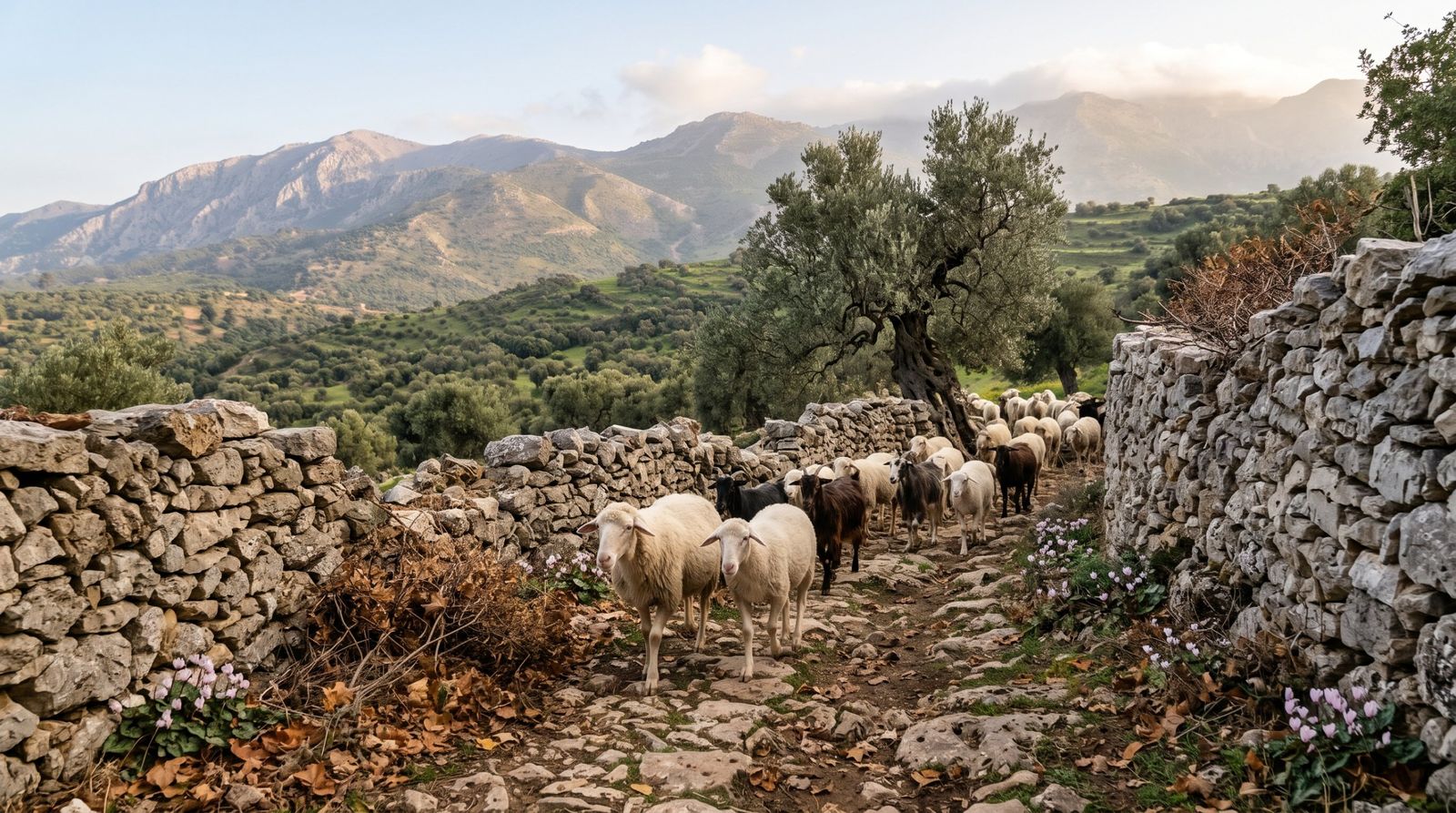
For a Cretan shepherd the cheese year does not start in January. It starts in October and November, when the first rains bring new grass and the ewes of the traditional Sfakia breed give birth. Flocks that spent the summer on the mountains come down to the lowlands. There is no milk for cheese yet: the lambs drink it all. In the cellars, the graviera and kefalotyri made in spring are now ripe. (Stefanakis and Sotiraki, n.d.; Voutzourakis et al., 2021)
Winter: the first milk
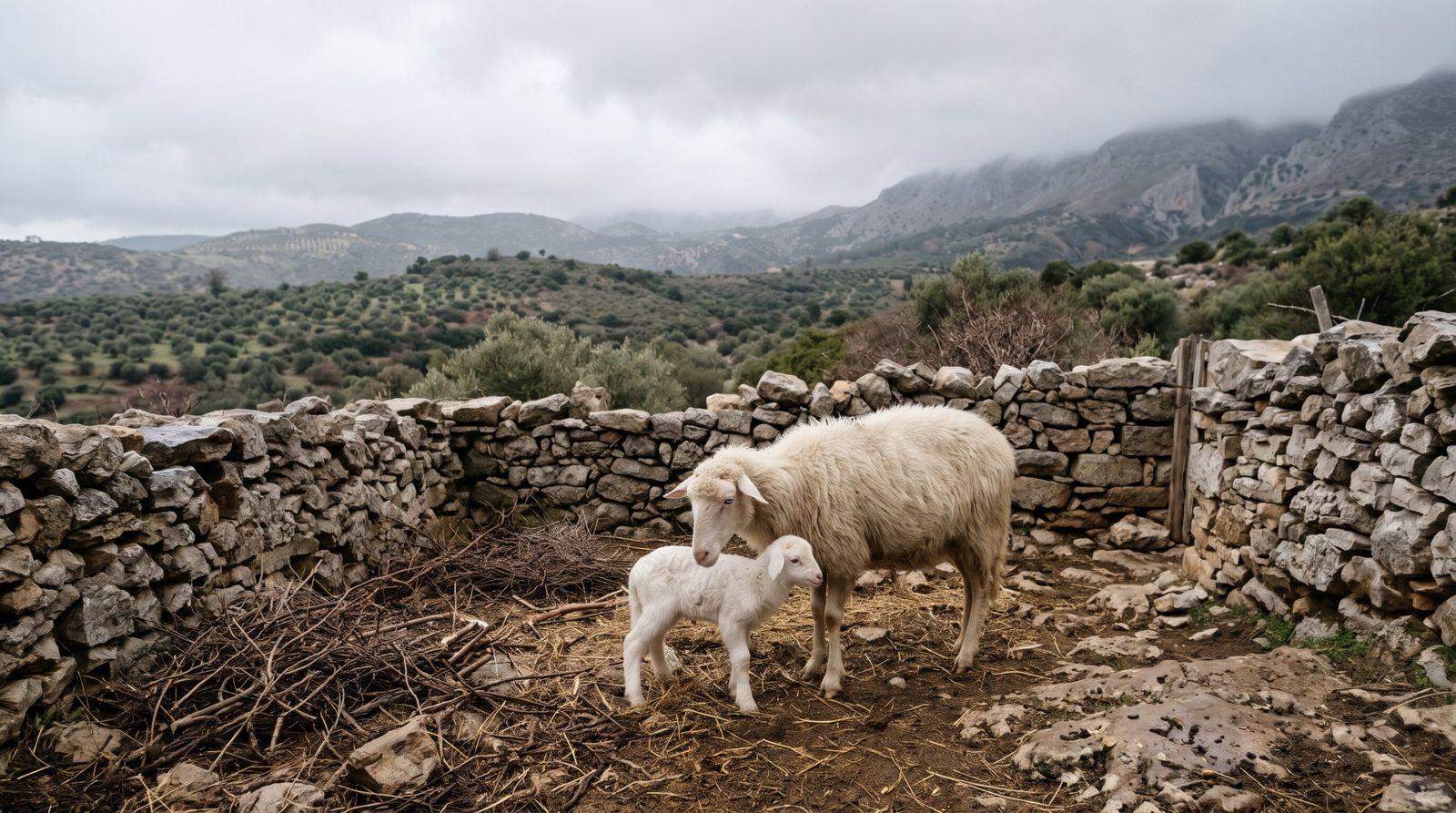
The lambs suckle for one to two months and are weaned around the end of December. Then milking begins, by hand twice a day in traditional flocks, and the cheese dairies come to life. For the protected cheeses, the milk may be used only from the tenth day after lambing. Younger ewes give birth later, in January and February, so the milk keeps coming. The first fresh myzithra, pichtogalo and malaka of the year appear, and the first wheels of graviera go down to ripen. (Stefanakis and Sotiraki, n.d.; Voutzourakis et al., 2021; PDO specifications)
Spring: the richest milk
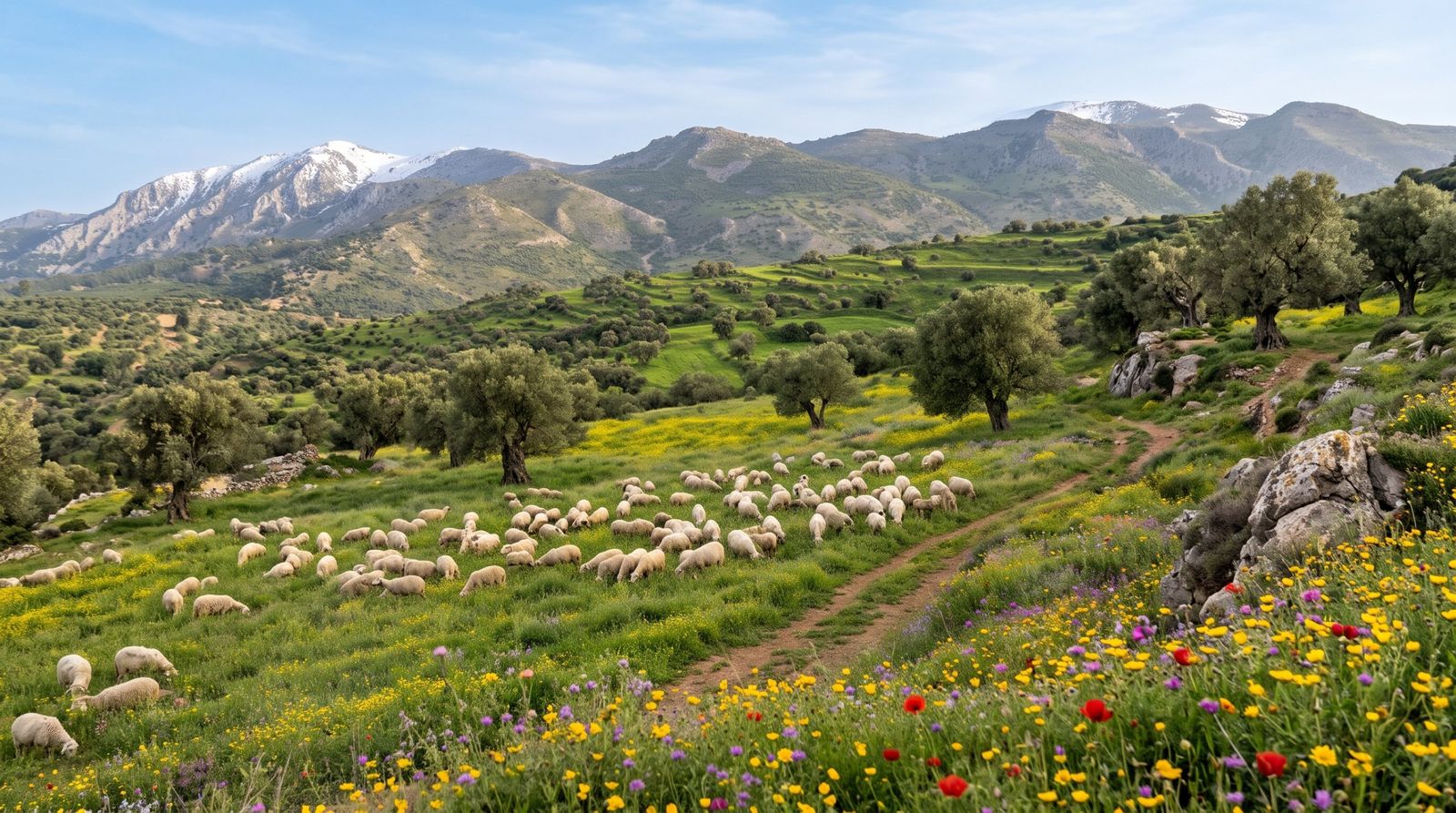
From January to May the flocks give most of their milk, and in spring the hills are covered with wild herbs and flowers. Research on Cretan flocks found that ewes grazing diverse mountain pastures give milk with more omega-3 fatty acids, and that Graviera Kritis shares aromatic compounds with the plants of its pastures. This is the season of fresh cheeses and of Easter: kalitsounia and the tourta of Chania are made with fresh myzithra, malaka and xinomyzithra. The first graviera of winter is ready. In May and June the rams join the flock again. (Voutzourakis et al., 2021; Voutzourakis et al., 2020; Bozoudi et al., 2016; Cantina, n.d.)
Summer: the mitata and the end of milking
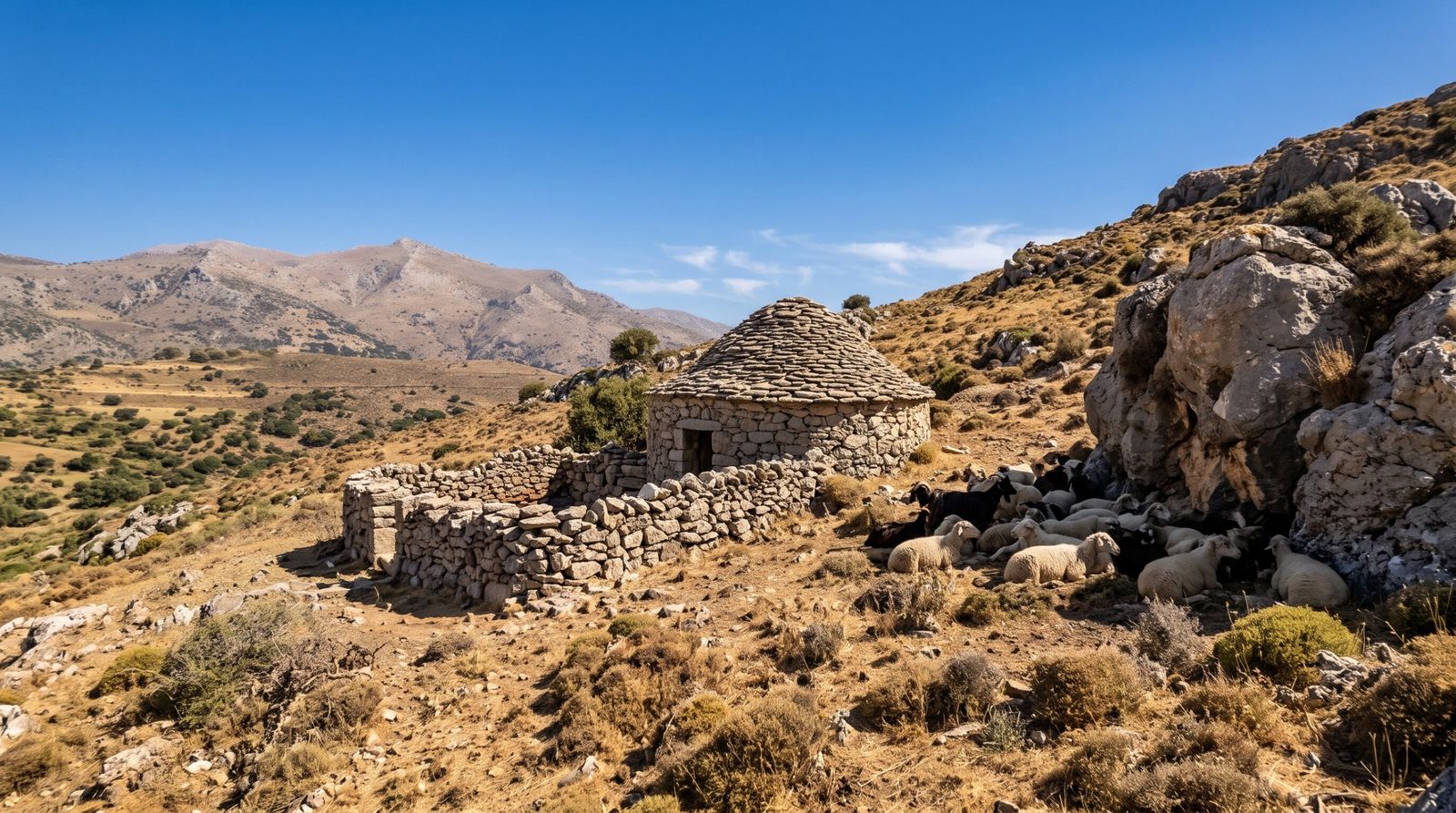
From mid-June the ewes are milked once a day, and by late July milking ends; only ewes that lambed late give milk into August. Traditionally many flocks went up to the mountains for the summer, and cheese was made in the stone mitata: myzithra and kefalotyri were the two main products of the shepherd's summer, and xygalo of Sitia was made in clay pots in the mitata. In August and September most traditional flocks are dry, and the cellars are full of ripening cheese. (Stefanakis and Sotiraki, n.d.; Voutzourakis et al., 2021; Blitzer, 1990; European Commission, 2011)
What this means for you
- Fresh cheeses are at their best from winter to early summer, when the milk is plentiful. If you visit Crete in spring, ask for fresh myzithra and pichtogalo.
- A graviera eaten in summer or autumn was usually made in winter or spring, from the milk of the richest pastures. Ask the cheesemaker how old it is.
- Today many farms also have ewes that lamb at other times of the year, and modern dairies make cheese for longer. The calendar shows the traditional rhythm that still shapes Cretan cheese.
See when each cheese is made on its own page under Cheeses, and how it was done in the mountains in The old ways.
References
- Blitzer, H. (1990). Pastoral life in the mountains of Crete: An ethnoarchaeological perspective. Expedition, 32(3), 34–41.
- Bozoudi, D. et al. (2016). Graviera Naxou and Graviera Kritis Greek PDO cheeses: Discrimination based on microbiological and physicochemical criteria and volatile organic compounds profile. Small Ruminant Research, 136, 161–172. https://doi.org/10.1016/j.smallrumres.2016.01.022
- Cantina. (n.d.). Tourta Chanion: Mia diaforetiki paschalini pita [Chania tourta: A different Easter pie; In Greek]. https://cantina.protothema.gr/chrisima/themata-chrisima/tourta-chanion-mia-diaforetiki-paschalini-pita/
- European Commission. (2011). Commission Implementing Regulation (EU) No 766/2011 [Xygalo Siteias (PDO)], single document in Official Journal of the European Union, C 312, 17.11.2010.
- PDO specifications of Graviera Kritis, Xinomyzithra Kritis and Pichtogalo Chanion: milk collected at least 10 days after lambing or kidding; ripening times. See the product pages of this site for the full references.
- Stefanakis, A. and Sotiraki, S. (n.d.). Characterisation of small ruminant production in Crete. https://core.ac.uk/download/10931486.pdf
- Voutzourakis, N. et al. (2020). Sustainable intensification? Increased production diminishes omega-3 content of sheep milk. Sustainability, 12(3), 1228.
- Voutzourakis, N., Stefanakis, A., Stergiadis, S., Rempelos, L., Tzanidakis, N., Eyre, M., Butler, G., Leifert, C. and Sotiraki, S. (2021). Effect of intensification practices, lambing period and environmental parameters on animal health, and milk yield and quality in dairy sheep production systems on Crete. Sustainability, 13(17), 9706. https://doi.org/10.3390/su13179706